

Why Healthcare Providers Need More Than a Paper Checklist


 Sep 28,2026
Every healthcare provider relies on documented evidence. Whether it’s a hospital, private clinic, imaging centre, day surgery facility or specialist practice, regulators, insurers, accreditation bodies and internal quality teams may all require proof that critical procedures were completed correctly.
Whether supporting internal quality programmes, accreditation standards or regulatory inspections, reliable operational records are a fundamental part of healthcare governance.
The question is always the same:
Can you prove what happened, who performed the work, when it happened, and on which asset or in which location?
For many healthcare organisations, the answer is only partial.
The issue is rarely that work isn’t being done. The issue is that the evidence supporting that work is often fragmented, paper-based and difficult to retrieve when it matters most.
Decent is a mobile-first workflow platform that transforms everyday operational activities into structured, evidence-backed records. By linking tasks to the appropriate asset or location and enabling evidence to be captured at the point of activity, healthcare organisations gain stronger traceability, greater operational visibility and faster access to the information they need during audits, inspections and investigations.
Here are five examples of how this works in practice.
Emergency Equipment Inspections
Life-saving equipment such as AEDs, crash carts, oxygen cylinders, infusion pumps and patient monitors requires routine inspection. In many organisations, these checks are still recorded on paper logs attached to the equipment.
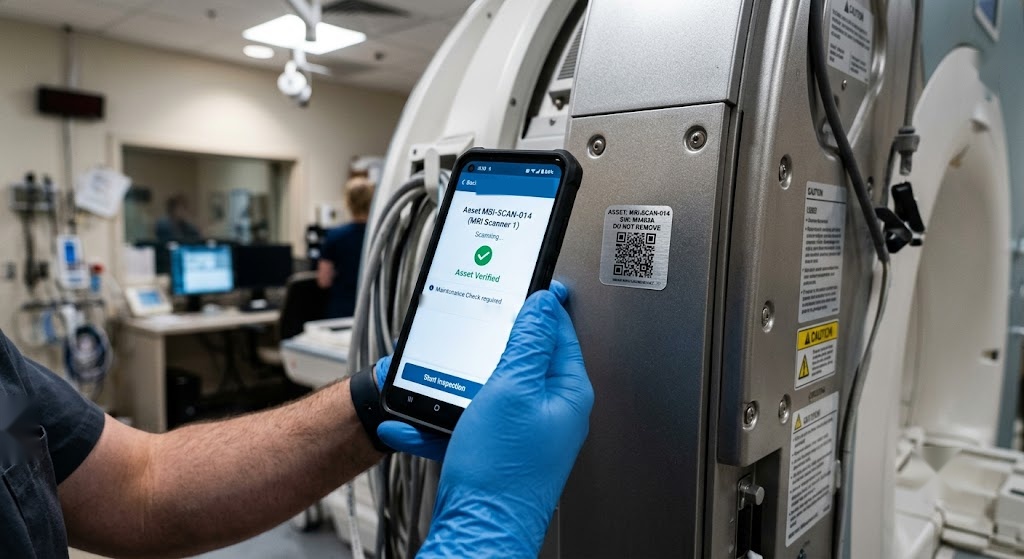
With Decent, each asset is identified by a QR code. Staff scan the asset, complete the digital inspection, capture supporting evidence where appropriate and submit the record.
Inspection records are linked to the specific asset, creating a complete maintenance history that can be retrieved quickly if the equipment becomes part of an audit, inspection or clinical investigation.
Sterilization and Autoclave Documentation
Hospitals, surgical centres and dental practices all depend on reliable sterilization processes. Every sterilization cycle should be traceable, including the machine used, the load and the outcome.
Many organisations still rely on paper logbooks. Where multiple autoclaves are in use, linking records to individual machines can become difficult.
With Decent, technicians identify the autoclave by scanning its QR code before recording cycle information and post-cycle verification. Supporting evidence, including photographs where appropriate, becomes part of a structured digital record linked directly to that machine.
During a regulatory inspection or a post-procedure infection investigation, healthcare providers can retrieve a complete sterilization history to support traceability.
Medication and Cold-Chain Checks
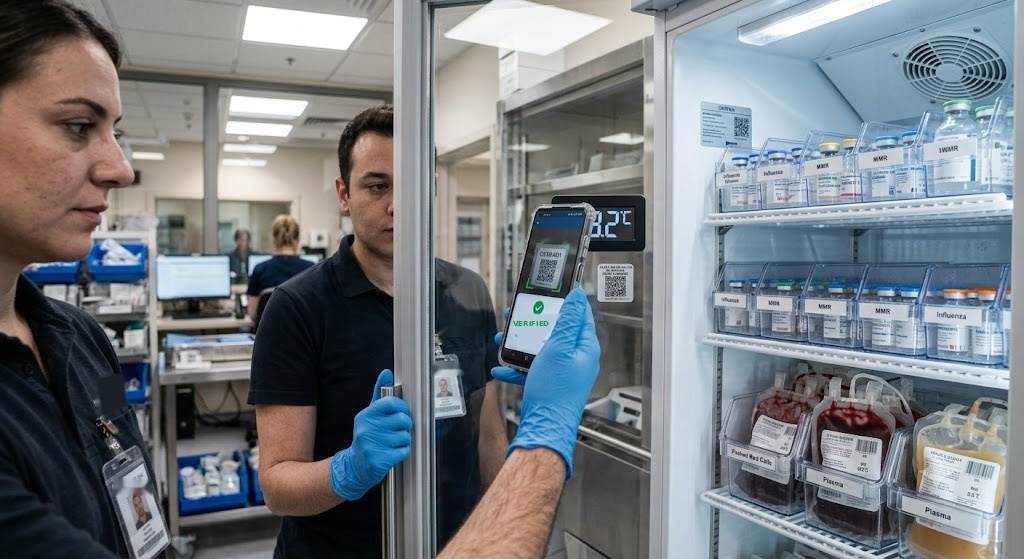
Vaccines, biologics, blood products and many medicines rely on continuous cold-chain storage. Many healthcare organisations still rely on paper-based temperature logs or other manual recording processes.
The challenge is that missed inspections or temperature excursions may not be identified until later, reducing the opportunity for timely corrective action.
With Decent, staff scan the refrigerator or storage unit, record the temperature, capture photographic evidence where appropriate and submit the inspection through the mobile app.
Managers gain real-time visibility into completed and outstanding checks, allowing potential issues to be identified while corrective action is still possible. Historical records remain linked to each storage unit, making them easy to retrieve whenever product integrity needs to be demonstrated.
Environmental Cleaning and Room Turnover
Operating theatres, patient rooms, procedure rooms and isolation areas all require documented cleaning procedures.
Paper checklists provide limited evidence beyond a signature, making it difficult to demonstrate when cleaning was completed or whether records were completed at the point of activity.
With Decent, staff scan the room, complete the digital cleaning workflow and submit the record while carrying out the work. The result is a consistent, timestamped history of cleaning activities linked to each location.
Whether supporting infection prevention programmes, accreditation reviews or internal quality processes, healthcare providers can retrieve complete cleaning records quickly when required.
Contractor and Biomedical Engineering Activities
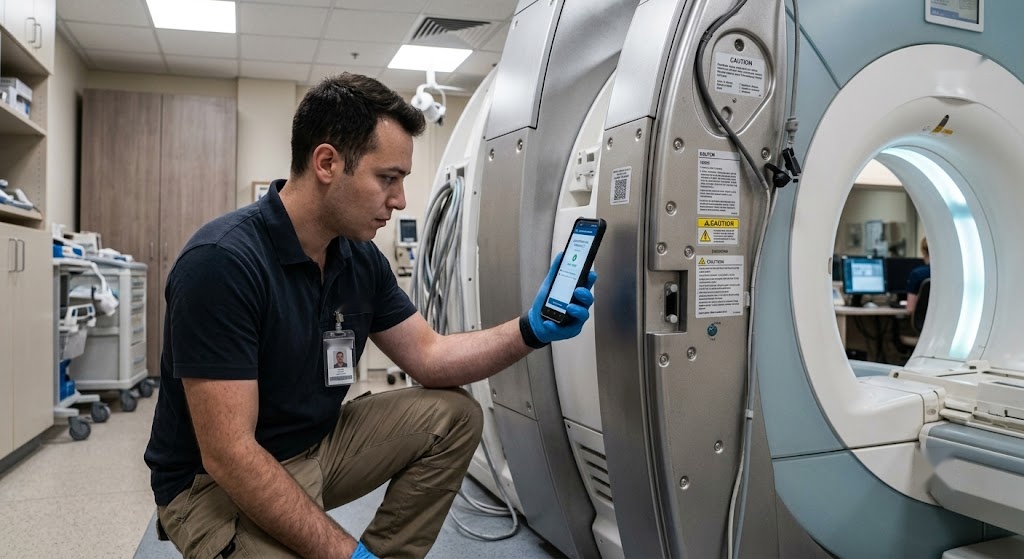
External engineers regularly service critical assets including MRI systems, CT scanners, X-ray equipment, ventilators and patient monitoring devices. Paper service reports can become disconnected from the equipment they relate to, making future retrieval difficult.
With Decent, contractors identify the asset by scanning its QR code before completing a digital maintenance workflow. Service details, supporting photographs and completion records remain linked to that specific piece of equipment.
The result is a complete maintenance history that stays with the asset regardless of which contractor performed the work.
From Paper Records to Operational Evidence
Healthcare organisations don’t simply need digital checklists. They need reliable operational evidence.
Decent does not replace clinical procedures. It strengthens the documentation that supports them.
The platform enables organisations to capture records at the point of activity and associate them with the appropriate user, asset or location. Supporting evidence such as photographs, measurements and completed checklists can be stored in structured, searchable records that are readily available when needed. Depending on deployment and configuration, Decent can also support tamper-evident audit records that strengthen traceability and audit readiness.
For operations, facilities and quality teams, this means more than digitising paperwork. It provides real-time visibility into completed and outstanding tasks, promotes consistent workflows across departments and sites, and improves access to evidence during audits, inspections and investigations.
As healthcare organisations continue to modernise their operations, the goal is not simply to replace paper. It is to help ensure that critical operational activities are supported by reliable evidence that supports audit readiness, accountability and operational confidence.
Want to see how these workflows work inside Decent? Book a 30-minute walkthrough with the team.


 Apr 20, 2026